



China, Sri Lanka Media Urged to Deepen Cooperation and Strengthen Global South Voice

Addressing the 2026 China–Sri Lanka Media Cooperation and Exchange Seminar in Colombo on September 11, Chinese Ambassador to Sri Lanka H.E. Wei Huaxiang emphasized the important role of the media as a bridge between the peoples of China and Sri Lanka, while highlighting the need for closer collaboration in journalism, content production, personnel training, technological innovation and international communication.
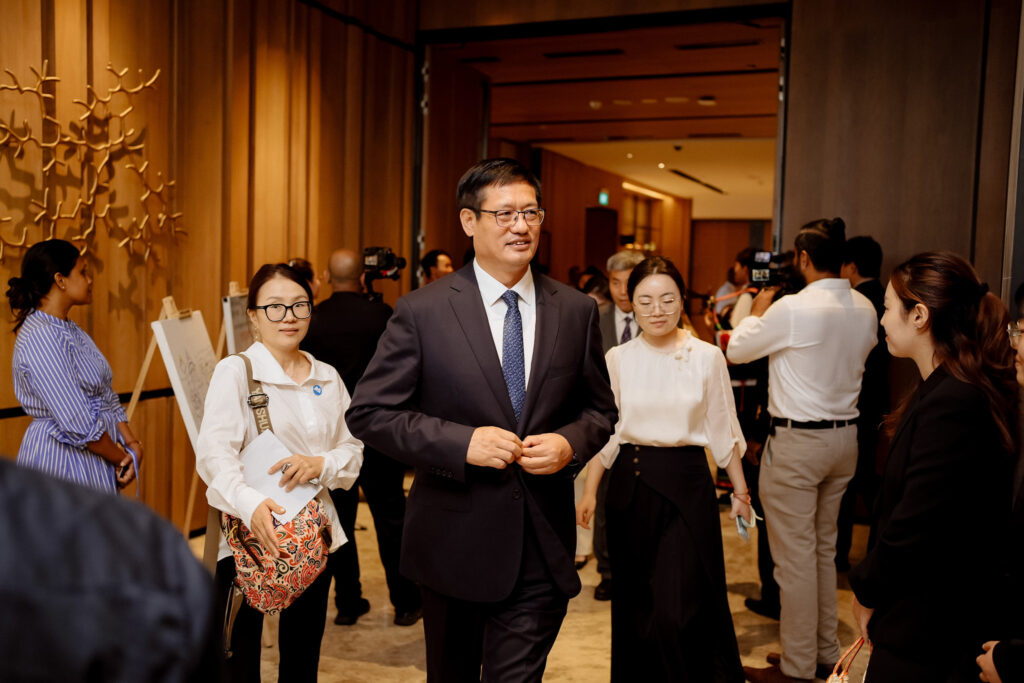
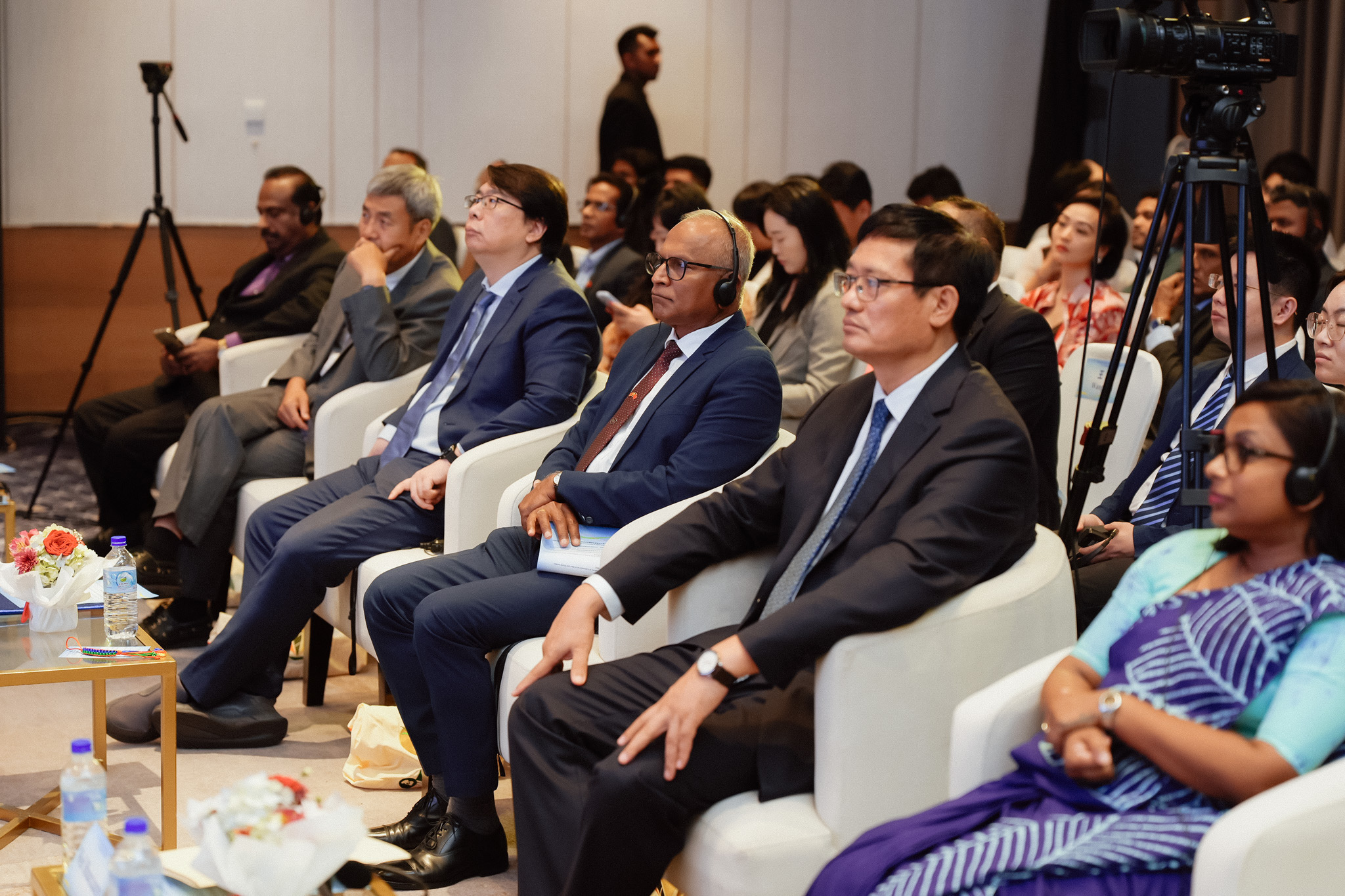
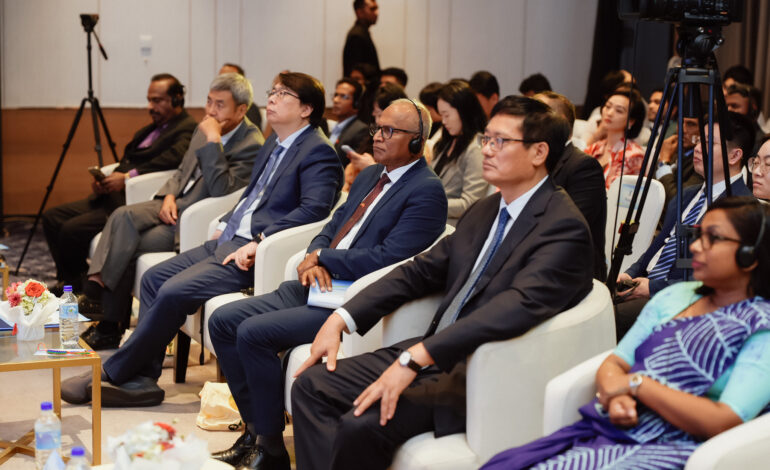
The seminar, held in Colombo, brought together media professionals, scholars and representatives of relevant institutions from both countries to discuss ways of strengthening media cooperation. The event was organized with the aim of implementing the important consensus reached by the leaders of Sri Lanka and China and promoting closer cooperation between the two countries’ media communities.
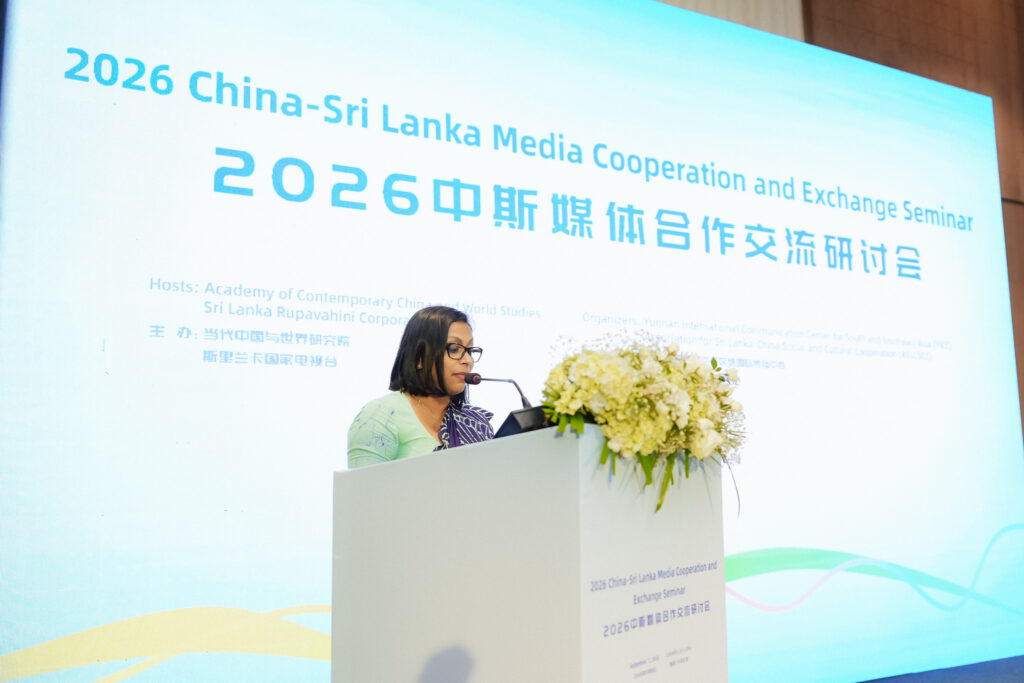
The seminar was jointly hosted by the Academy of Contemporary China and World Studies and the Sri Lanka Rupavahini Corporation (SLRC), with the Yunnan International Communication Center for South and Southeast Asia (YICC) and the Association for Sri Lanka–China Social and Cultural Cooperation (ASLCSCC) serving as co-organizers.
The event was held at Emerald, Courtyard by Marriott Colombo, Colombo City Centre, and featured opening remarks, keynote speeches, a roundtable discussion and the release of key outcomes on future media cooperation.
A friendship rooted in history
Opening his remarks with greetings in Sinhala, Tamil and Arabic — “Ayubowan! Vanakkam! Assalamu alaykum!” — Ambassador Wei described China and Sri Lanka as countries with a long-standing history of friendship and cooperation.
He pointed to the ancient Silk Road as evidence of centuries-old exchanges between the two countries and highlighted the Rubber-Rice Pact as an important milestone that strengthened the friendship between China and Sri Lanka during a difficult period in their respective histories.
According to Ambassador Wei, the relationship has continued to develop in the modern era, with cooperation under the Belt and Road Initiative producing a range of projects and opportunities. He described the media as important witnesses, chroniclers and promoters of this continuing relationship.
The Ambassador also noted the significance of the coming anniversaries. In 2027, China and Sri Lanka will mark the 70th anniversary of the establishment of diplomatic relations, while also commemorating the 75th anniversary of the signing of the Rubber-Rice Pact.
He said these milestones provide an important opportunity for both countries to build upon the achievements of the past while charting a new course for bilateral relations.
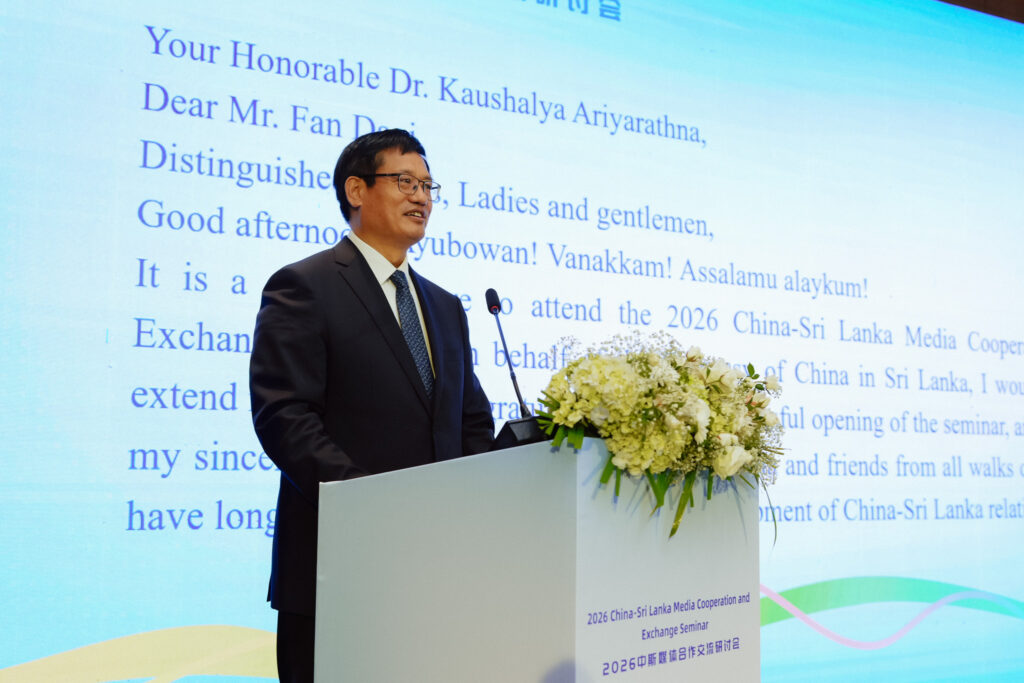
Media urged to tell the real stories of cooperation
A central message of Ambassador Wei’s address was the need for journalists and media organizations to go beyond reporting official developments and bring the human stories behind China–Sri Lanka cooperation to the public.
He called on the media of both countries to serve as “recorders of true stories”, highlighting the sincerity and trust that underpin bilateral cooperation.
Referring to major cooperation projects, he pointed to the development of Colombo Port City, the continued development of Hambantota Port, and the work of the China-Sri Lanka Joint Research and Demonstration Centre for Water Technology (JRDC).
He also highlighted the provision of school uniform fabrics to Sri Lanka, describing such cooperation as examples of initiatives that have contributed to economic development while providing tangible benefits to local communities.
Ambassador Wei further noted that Chinese-made electric vehicles have increasingly become part of everyday life in Sri Lanka, while identifying green energy, agricultural technology and artificial intelligence as emerging areas where China–Sri Lanka cooperation has significant potential.
He encouraged journalists from both countries to visit the front lines of these projects and provide objective and comprehensive coverage of their impact.
According to the Ambassador, such reporting can help audiences better understand how China’s modernization experience connects with Sri Lanka’s own development aspirations, while highlighting opportunities for mutual benefit and shared prosperity.
Building bridges between the peoples of China and Sri Lanka
Ambassador Wei also placed strong emphasis on cultural exchanges and mutual understanding between the two peoples.
He noted that China and Sri Lanka are both home to ancient civilizations and rich cultural traditions, while highlighting tea culture as one of the areas that has helped bring the two peoples closer together.
In particular, he pointed to the growing connections between Yunnan Province and Sri Lanka, where cooperation in the tea sector has created opportunities for both economic collaboration and cultural exchange.
The Ambassador said media cooperation should similarly become an important channel for strengthening people-to-people relations.
He noted that the Chinese Embassy regularly invites groups of Sri Lankan journalists to China for training and exchange programmes, while calling for these initiatives to be expanded through stronger and more practical cooperation mechanisms.
He proposed greater collaboration in areas including news reporting, content production, professional training and technological innovation.
At the same time, he urged both sides to make greater use of new media, short-form video and social media platforms to engage younger audiences and communicate the stories of China–Sri Lanka friendship in ways that are relevant to a new generation.
Seminar brings together media and academic representatives
The Colombo seminar provided a platform for representatives from the media, academia and relevant institutions to exchange views on the future of China–Sri Lanka media cooperation.
The opening session featured remarks from Kaushalya Ariyarathne, Deputy Minister of Health and Mass Media of Sri Lanka; H.E. Wei Huaxiang, Ambassador of China to Sri Lanka; and Fan Daqi, Deputy President of the Academy of Contemporary China and World Studies.
The keynote sessions included contributions from Wang Lei, Director of the BRICS Cooperation Research Center at Beijing Normal University and Senior Expert in International Relations, together with Sri Lankan academics Professor Manoj Jinadasa, Head of the Department of Mass Communication at the University of Kelaniya, and Professor Thissa Ravindra Perera of the Department of Management and Organization Studies at the University of Colombo.
The programme also included a roundtable discussion, providing participants with an opportunity to exchange views on practical areas of cooperation and the future development of China–Sri Lanka media relations.
Colombo Initiative and Media Cooperation Roadmap unveiled
A significant component of the seminar was the release of key outcomes aimed at strengthening practical cooperation between Chinese and Sri Lankan media organizations.
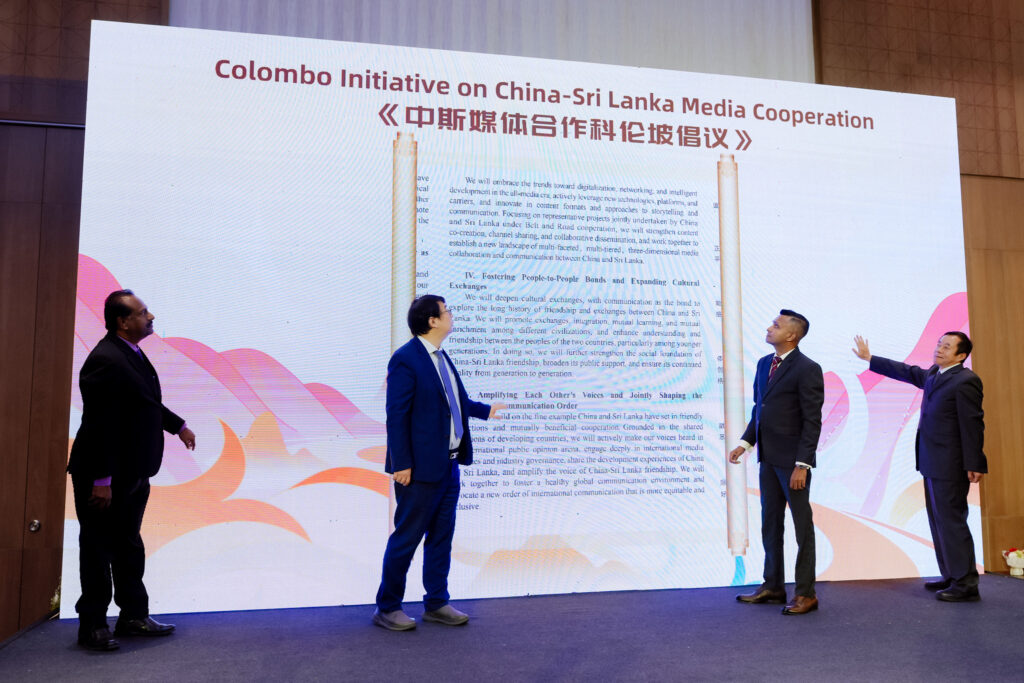
The event witnessed the launch of the China–Sri Lanka Media Cooperation Initiative and the China–Sri Lanka Media Cooperation Roadmap.
Ambassador Wei described the release of these outcomes as an important step towards implementing the consensus reached by the leaders of the two countries and advancing practical cooperation between the media communities of China and Sri Lanka.
The initiative and roadmap are intended to provide a framework for expanding media exchanges and creating new opportunities for cooperation in areas such as reporting, content creation, professional development and technological innovation.
Looking towards a new chapter in bilateral friendship
Concluding his remarks, Ambassador Wei called on participants to regard the Colombo seminar as a new starting point for deeper and broader media cooperation.
He urged Chinese and Sri Lankan journalists and media organizations to explore new forms of collaboration, expand existing areas of cooperation and use their reporting, cameras and digital platforms to document a new chapter in the friendship between the two countries.
The seminar comes at a significant period in China–Sri Lanka relations, following the leaders of both countries’ commitment to further strengthening bilateral friendship and cooperation and building a Sri Lanka–China community with a shared future.
The event’s official invitation noted that the January 2025 state visit to China by Sri Lankan President Anura Kumara Dissanayake provided an important foundation for further strengthening the longstanding relationship between the two countries.
With the 70th anniversary of diplomatic relations and the 75th anniversary of the Rubber-Rice Pact approaching in 2027, the Colombo seminar highlighted the growing importance of media cooperation in shaping public understanding, encouraging people-to-people exchanges and supporting closer ties between China and Sri Lanka.
As both countries look towards the next chapter of their relationship, the media are being called upon to play a greater role — not simply as observers of bilateral cooperation, but as active bridges connecting the two peoples and strengthening the voice of the Global South in the international information landscape.